
.svg)
ADHD Medication After Diagnosis: Repeat Prescriptions, Reviews and Changing Doctors

Receiving an ADHD diagnosis can bring real relief. For many people, it's the first time a lifetime of scattered focus, missed deadlines, or restlessness finally makes sense. A second, quieter hurdle often follows: many people assume that once treatment starts, it simply continues. In practice, ongoing access to ADHD medication involves an arrangement between clinicians — and understanding that arrangement early can save a lot of stress later.

What happens after an ADHD diagnosis?
A diagnosis and an initial prescription are usually just the first steps. ADHD medication in Australia is closely monitored, and most patients will need periodic reviews, repeat authorisations, and sometimes a formal handover between clinicians as their circumstances change — a house move, a new GP, a psychiatrist retiring or changing practices, or simply a shift to telehealth. None of this is unusual, but it does mean the “who prescribes what, and when” question matters more for ADHD care than for many other conditions.
Who prescribes ADHD medication after diagnosis — your GP or your psychiatrist?
Typically, a psychiatrist is the clinician who confirms an ADHD diagnosis and recommends or initiates treatment. From there, ongoing care is often shared:
· The psychiatrist may continue to conduct periodic reviews, adjust treatment where needed, and provide the authorisations that allow prescribing to continue.
· The GP may, in some circumstances, take on day-to-day prescribing of repeats under an agreed shared care arrangement, so patients aren't required to see a psychiatrist for every single script.
Exactly how this split works isn't universal. It depends on the medication itself, the individual patient's history and needs, which prescribers are involved, and — importantly — the rules that apply in the relevant state or territory. Some jurisdictions have stricter permit requirements for stimulant medications than others, and those requirements can also change over time.
Rules differ enough between states that a general article can only point you in the right direction. Your own treating team, or your state or territory health department, is the source of truth for your situation.
What happens to my ADHD prescription if I change GP or psychiatrist?
This is where many patients are caught off guard. Changing a GP, changing a psychiatrist, moving to a new pharmacy, or relocating interstate can each trigger a fresh review of the prescribing arrangement. A new clinician stepping into an existing ADHD treatment plan will typically want to see:
· previous specialist reports and diagnostic documentation
· a treatment history, including dose changes and past reviews
· confirmation of the current prescribing arrangement and who has been responsible for it
Reviewing all of this takes time — and a new GP or psychiatrist may not be willing to issue a prescription until they've done so.
If you wait until your medication is nearly finished before starting this conversation, a short administrative delay can turn into a genuine treatment gap.

Questions worth asking before you change anything
Before ending an existing arrangement with a GP or psychiatrist, it's worth asking directly:
· Who is responsible for my next prescription — you, or the other clinician in my care?
· When is my next specialist review due, and what happens if I change providers before then?
· What records or reports should be transferred, and who should send them?
· Is my new GP or psychiatrist willing and able to take on this role, and have they confirmed that in writing?
These are reasonable questions to raise with any treating clinician, and a well-run practice will expect them.
What if I'm about to run out of medication?
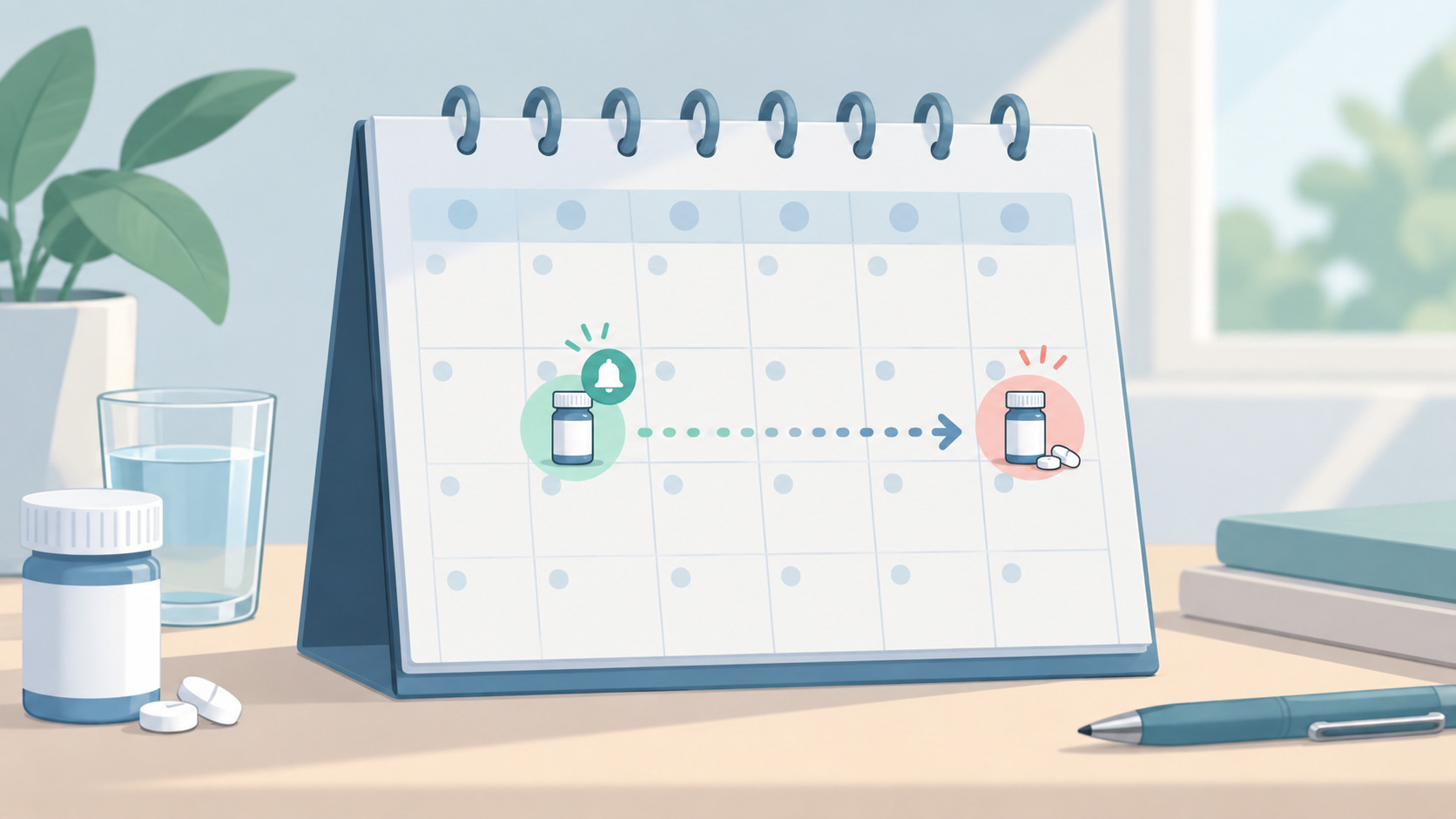
If a review or handover hasn't been finalised and you are close to running out, contact your prescriber's practice as soon as you notice — not on the day of your last dose. Practices can often bring a review forward, issue an interim script, or send records ahead to a new prescriber more quickly than a patient expects. Your pharmacist can also tell you what is on your current script and whether any repeats remain.
Don't change how you take a prescribed medication, or stop it, without speaking to your prescriber first. If you feel unwell, or if your mental health deteriorates while you are waiting, contact your GP, or Lifeline on 13 11 14 if you need to talk to someone urgently.
Planning ahead protects continuity of care
The single most useful thing you can do is plan early rather than reactively. That means raising the topic of an upcoming move, a provider change, or an approaching review well before medication is due to run out — not the week it does. It also means treating general advice from other patients, online forums, or social media as a starting point for questions, not as a substitute for what your own treating team tells you about your own care. Prescribing rules and individual clinical circumstances vary too much for general advice to be reliably applied to any one person.
Where Dokotela fits
Dokotela is a telehealth psychiatry service operating across Australia.
You need a referral from your GP to see a psychiatrist with a Medicare rebate.
If you are moving, changing providers, or your current psychiatrist is no longer available, ask your GP to refer you and to send your previous specialist reports and treatment history with the referral.
The bottom line
An ADHD diagnosis opens the door to treatment, but staying on that treatment smoothly relies on a working arrangement between the clinicians involved — and on patients understanding, in broad terms, how that arrangement functions. Asking early, keeping records organised, and confirming new arrangements before ending old ones are the simplest ways to avoid an unnecessary gap in care.
Speak with your GP or psychiatrist early if you are considering changing providers, or if you're unsure who is currently responsible for your next prescription.
This article provides general information only and is not a substitute for medical advice. Prescribing requirements, eligibility and treatment arrangements vary by state, medication and individual circumstances. Speak with your GP, psychiatrist, pharmacist or relevant service about your own situation. Seek urgent medical care for severe or concerning symptoms.

Social Skills Support for Young Australians via Telehealth
For many young adults living with autism spectrum disorder (ASD), ADHD, social anxiety or social communication difficulties, building friendships can feel like navigating a world without a map.
Social Skills Support for Young Australians via TelehealthChild & Adolescent Psychiatry: Essential Guidance for Parents
Decoding the World of a Child & Adolescent Psychiatrist: What Parents Need to Know Every child’s mental well-being is of utmost importance, and as parents.
Child & Adolescent Psychiatry: Essential Guidance for Parents


