
.svg)
Social Skills Support for Young Australians via Telehealth

For many young adults living with autism spectrum disorder (ASD), ADHD, social anxiety or social communication difficulties, building friendships can feel like navigating a world without a map.
The desire to connect is there, but the practical skills like how to start a conversation, how to handle disagreements and how to read social cues don’t always come naturally.
Structured social skills programs can make a real difference, but access has been limited.
Long waitlists, a shortage of group-based offerings and geographic barriers mean that many individuals who would benefit from these programs miss out.
That’s something we’re working tochange.
What Is PEERS® and Who Is It For?
PEERS® (Program for the Education and Enrichment of Relational Skills) is an evidence-based social skills program developed at the University of California, Los Angeles (UCLA).
It’s internationally recognised and has been extensively researched, with studies demonstrating improvements in social knowledge, social responsiveness and overall social functioning.
The program is designed to help young adults develop practical skills for making and keeping friends, managing conflict, handling rejection and navigating romantic relationships.
It uses a structured format that includes rules, role-playing exercises and real-world homework assignments, giving participants the tools to practise what they’ve learnt in their everyday lives.
PEERS® is particularly well suited for young adults aged 18–35 who struggle with social communication.
It’s not about changing who someone is, it’s about equipping them with strategies that make social interactions feel more manageable and rewarding.
Why Telehealth Changes the Picture
One of the biggest challenges with group-based programs like PEERS® has been getting them to the people who really need them, especially for anyone living outside a major city.
And for many neurodiverse individuals, the logistics of travel, unfamiliar environments and large group settings can feel overwhelming.
Telehealth removes these obstacles.
Participants can join sessions from the comfort of their own home, which for some people is exactly the kind of low-pressure environment that helps them engage more openly.
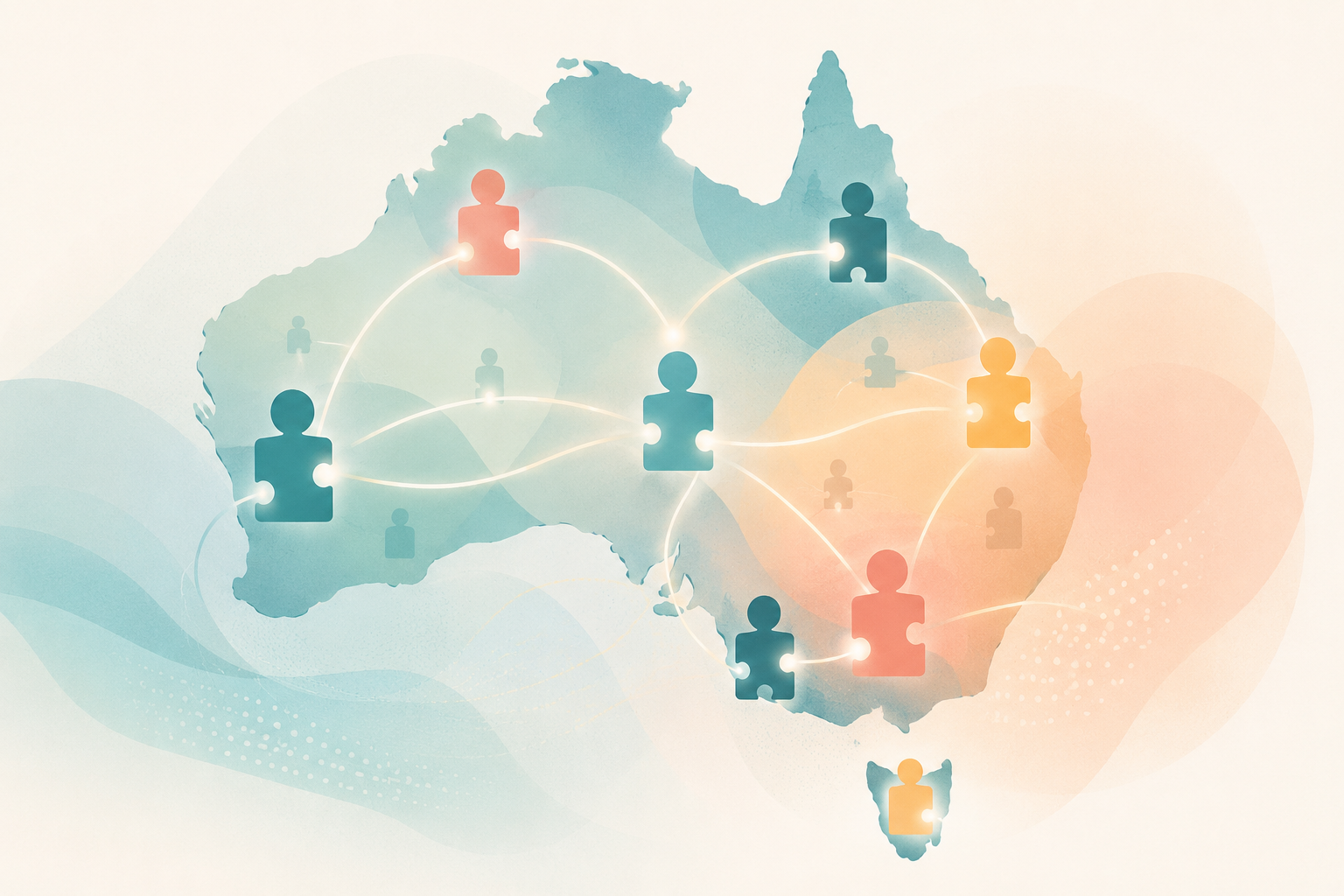
It also means that someone in a regional or rural area has the same opportunity to access a structured, evidence-based program as someone living in Sydney or Melbourne.
The Role of Nurse Practitioners in Delivering Group Programs
When people think about who delivers social skills programs, they might picture a psychologist or a psychiatrist.
But Nurse Practitioners are an incredibly well-placed and often under utilised workforce for this kind of structured group intervention.
Nurse Practitioners bring a unique combination of clinical training, therapeutic skills, and hands-on experience with behavioural interventions.
They’re skilled at building rapport, managing group dynamics, and supporting individuals with complex needs.
Their training equips them to deliver structured programs while adapting their approach to the needs of each participant.
By expanding the pool of clinicians who can facilitate programs like PEERS®, we’re helping to address one of the biggest bottlenecks in mental health care:
The limited availability of specialist-led group offerings.
This means more participants can be supported without adding pressure to already-stretched specialist services.
How Dokotela Is Making It Happen
At Dokotela, we’ve built our telehealth model to support the delivery of PEERS®-informed group programs in away that’s safe, consistent and flexible.
Our practitioners follow the PEERS® framework and principles, making the program accessible to participants across Australia.
Our approach is supported by structured clinical governance, meaning that every session is delivered within a clear framework and with the backing of our broader clinical team.
For referrers, this offers an accessible pathway for patients who need social skills support but may not need individual therapy.
Whether you’re a GP, psychiatrist, psychologist or allied health professional, here’s what you can expect when you refer a patient to one of our programs:
- A structured, evidence-informed program that follows the PEERS® framework and principles
- Experienced Nurse Practitioners facilitating sessions with clinical oversight and support
- Flexible telehealth delivery that removes geographic barriers and supports participants in regional and rural areas
- A neurodiversity-affirming approach that focuses on building skills and confidence
When to Consider a Referral
A PEERS®-informed program may be a good fit for young adults (aged 18–35) who experience difficulty making or keeping friends, struggle with social communication, find it challenging to navigate group social situations or would like support with romantic relationship skills.
It’s particularly relevant for individuals with ASD, ADHD, social anxiety or other neurodevelopmental conditions, but it’s open to anyone who would benefit from structured social skills support.
If you have a patient who you think could benefit, we’d love to hear from you.
Our team can help you determine whether the program is the right fit and guide you through the referral process.
Expanding What’s Possible, Together
We know that social connection is fundamental to wellbeing.
For young adults who find social interactions challenging, having access to the right support at the right time can be truly life-changing.
By combining the strength of an evidence-based program like PEERS® with the reach of telehealth and the skill of Nurse Practitioners, we’re helping more people get the support they deserve, no matter where they live.
Interested in referring a patient, or want to learn more about hosting sessions as a PEERS®-accredited practitioner?
Get in touch with our team.

ADHD & Parenting: Strategies, Treatment and Support
ADHD & Parenting: Strategies, Treatment and Support
ADHD & Parenting: Strategies, Treatment and SupportChild & Adolescent Psychiatry: Essential Guidance for Parents
Decoding the World of a Child & Adolescent Psychiatrist: What Parents Need to Know Every child’s mental well-being is of utmost importance, and as parents.
Child & Adolescent Psychiatry: Essential Guidance for Parents


